
Stigma acts as a major deterrent for queer men in having conversations about their sexual health and staying engaged with regular testing. Fear of rejection, worries about privacy, and lack of access to care that feels safe or respectful are social pressures that put queer men at risk. AUGUR offers a portal to track, understand, and share verified sexual health results in a safe, privacy focused environment.
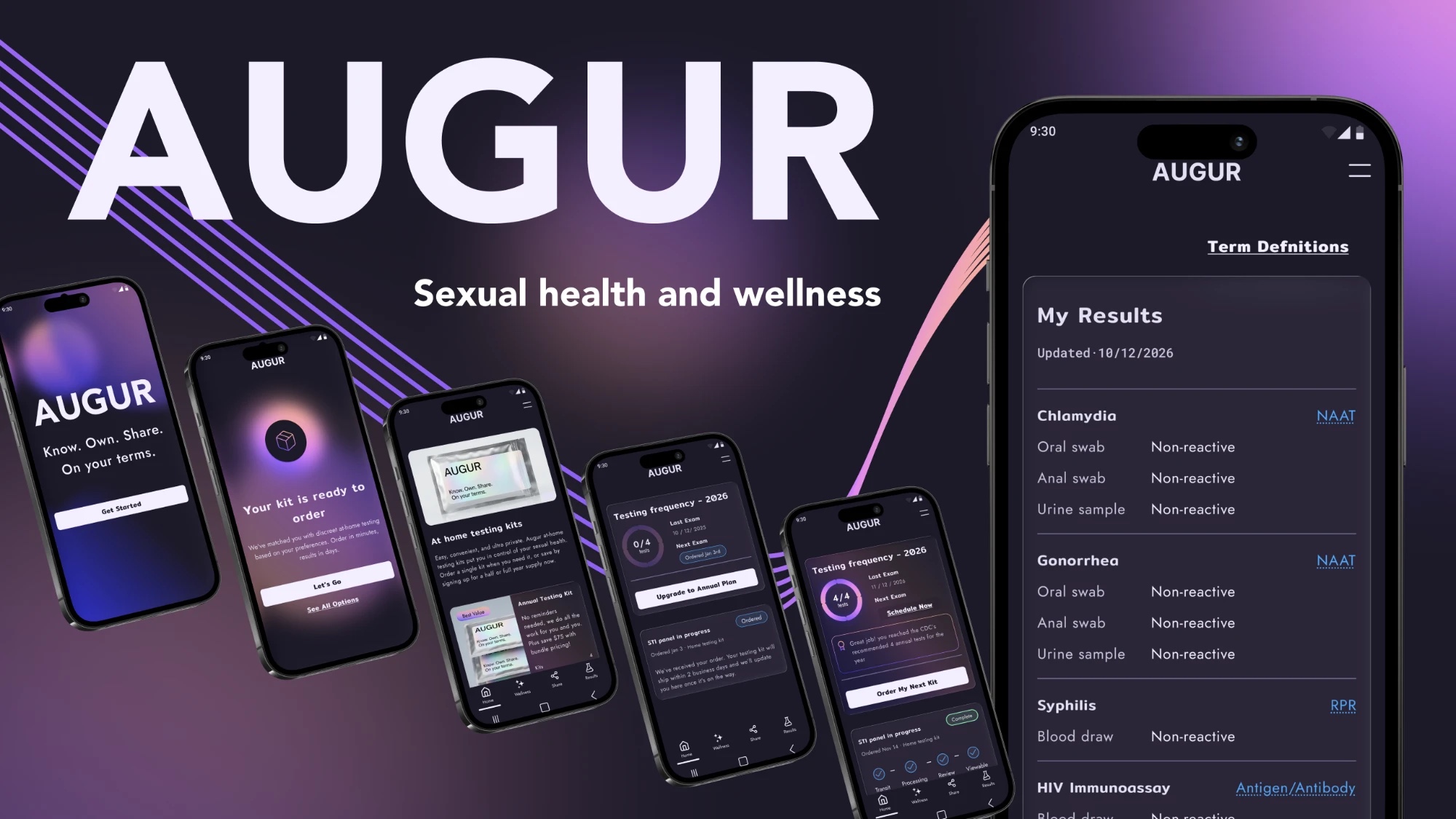
Applications for queer men like Grindr, Scruff, etc. encourage self reporting, and openness around sexual health conversations. However these conversations are awkward and affected by health and sexual stigma. Attitudes around positive status, a blank status section, or worries about false self reports for PReP adherence act as negative, stigmatizing reinforcements.
Unfortunately, the sensitivity of this topic made demographic specific recruitment impossible. In the first research phase of the AUGUR project I consulted multiple related Sub Reddits, Hosted a month long recruitment survey on Survey Circle, and attempted word of mouth recruitment in my social circles but to no avail. Without a budget for paid targeting platforms, I opted for empirical analysis.
I gathered a corpus of 23 studies covering topics such as STI and HIV stigma, the use of technology in sexual health reporting and monitoring, testing adherence factors, and affecting socio-economic factors. I then used claude to help me analyze the studies, pull significant findings, and draw relational conclusions across studies.
MSM account for (U.S. statistics)
Of total US population
Of all HIV infections.
Of all primary syphillis infections.
Early Hypothesis
This project began under the premise that integrating a sexual health app with pre-existing Electronic Health Records (EHR) systems would help solve the issue of stigma preventing MSM from discussing their results. Empirical evidence showed a different storry
What emperical analysis uncovered
Utilizing my key findings from the empirical analysis stage, I employed Claude Design to ideate on key design directions. This allowed me to quickly produce and analyze design directions for the two key feature sets; Onboarding and the Dashboard.
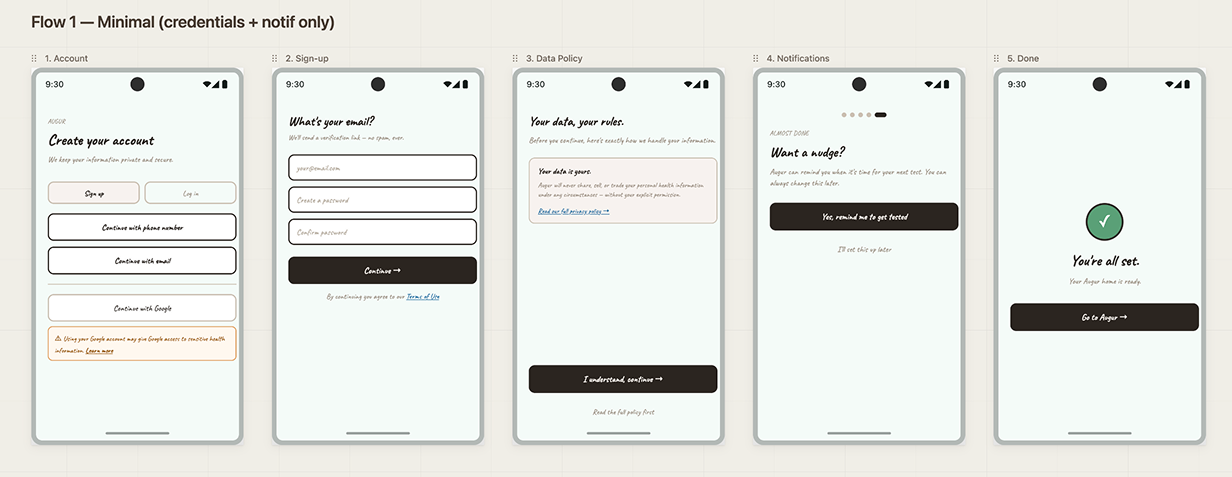
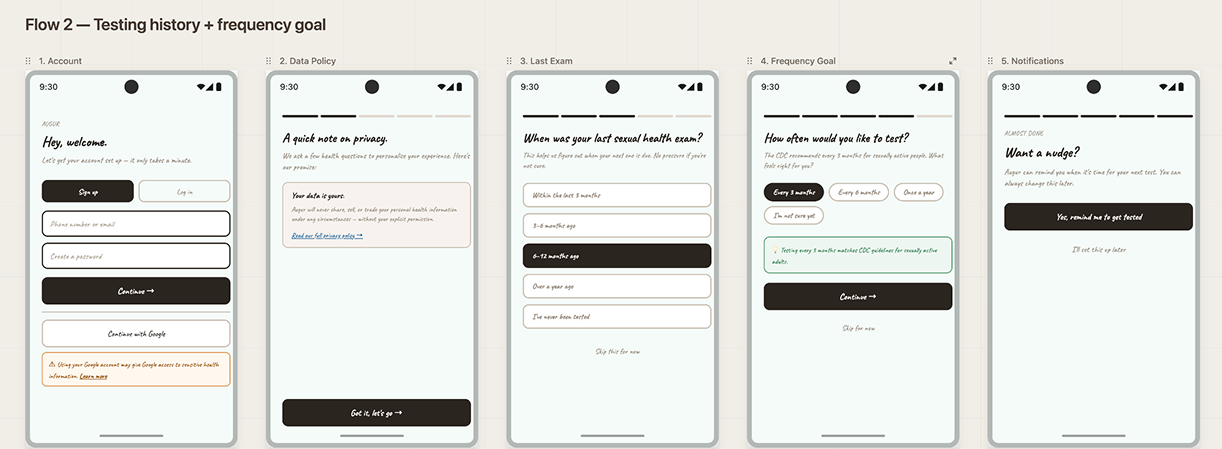
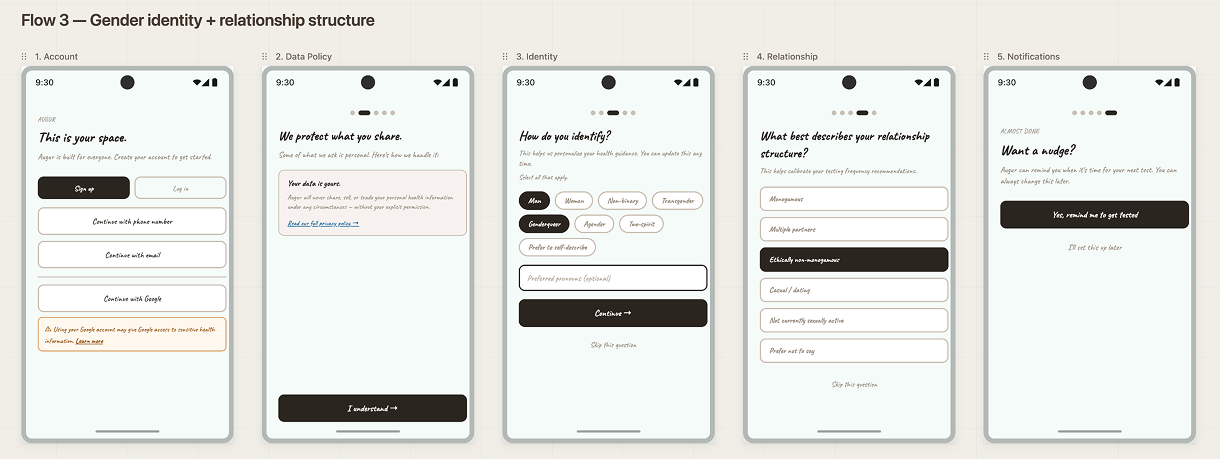
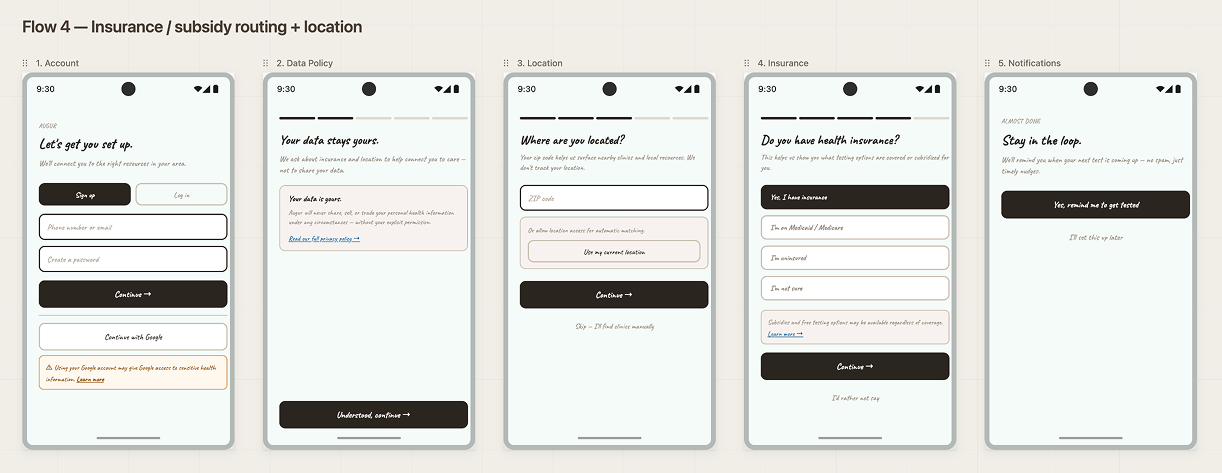
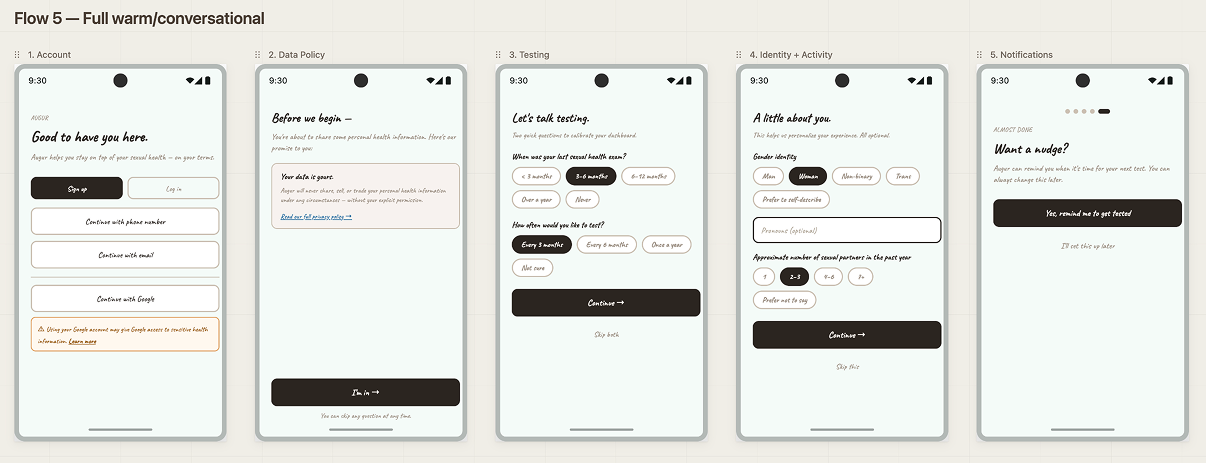
My prompts focused on guiding Claude Design towards an onboarding flow that asked questions that would help sort a user into one of two testing methodologies: at-home testing, and clinical testing. I used my best judgement to select elements that made sense for the product I was trying to build while discarding many of the proposed suggestions because they were superficial or misaligned.
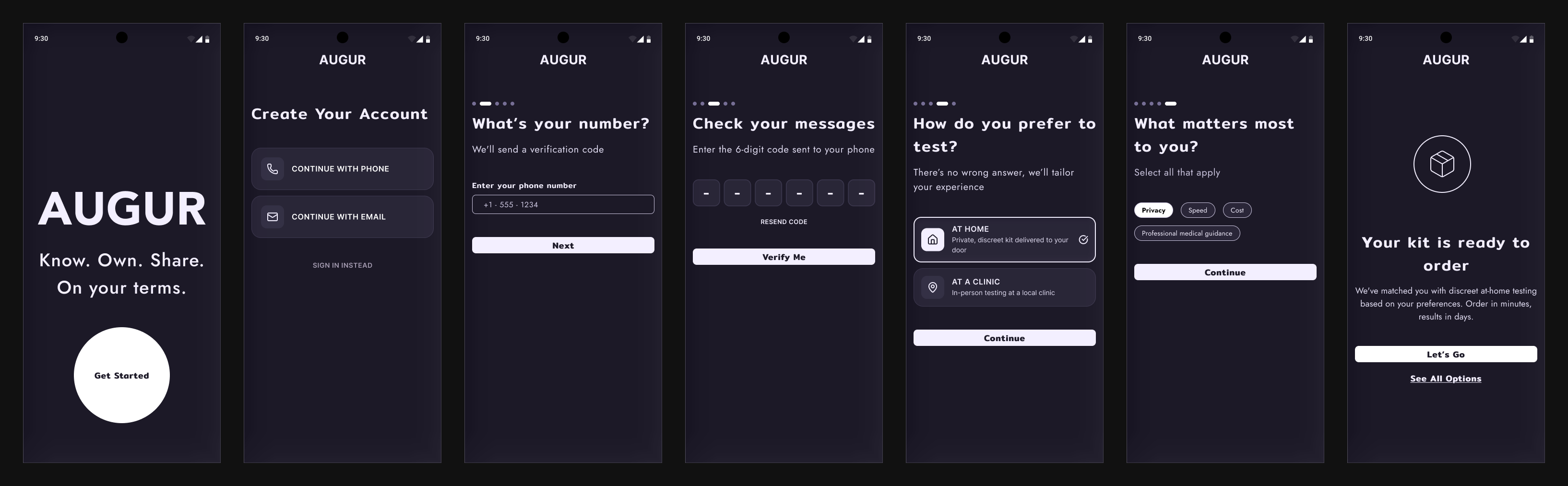
I refined the onboarding question sequence to most necessary steps which included account set up, testing method preference, and highest priority factors. My key focus was sorting users into the two testing groups and making the onboarding process easy and straightforward by eliminating fluff questions and unecessary interactions.
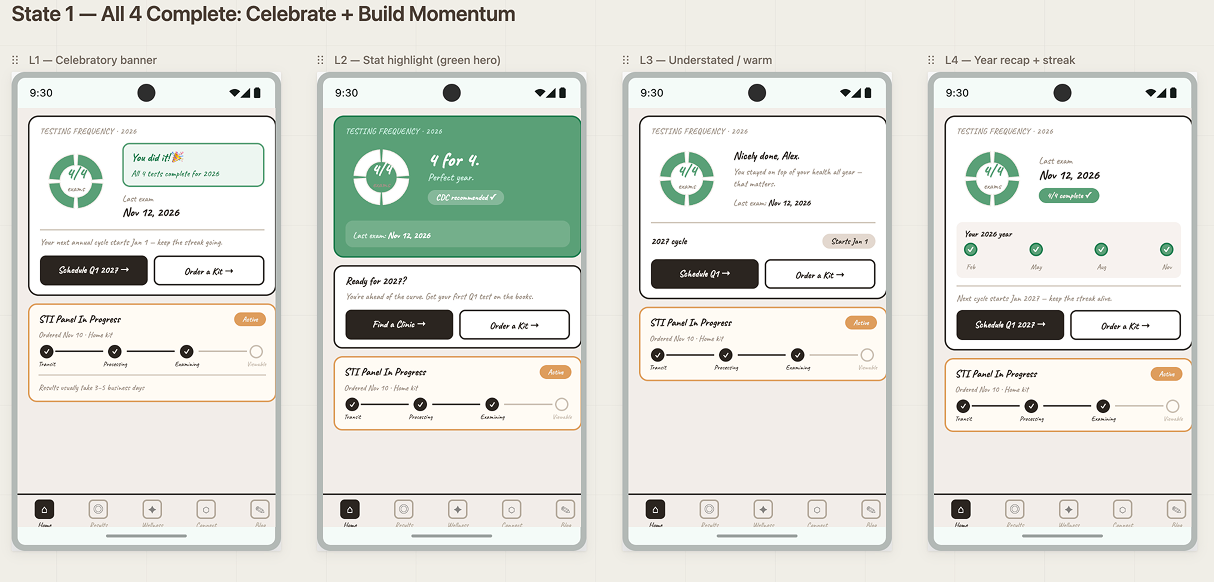
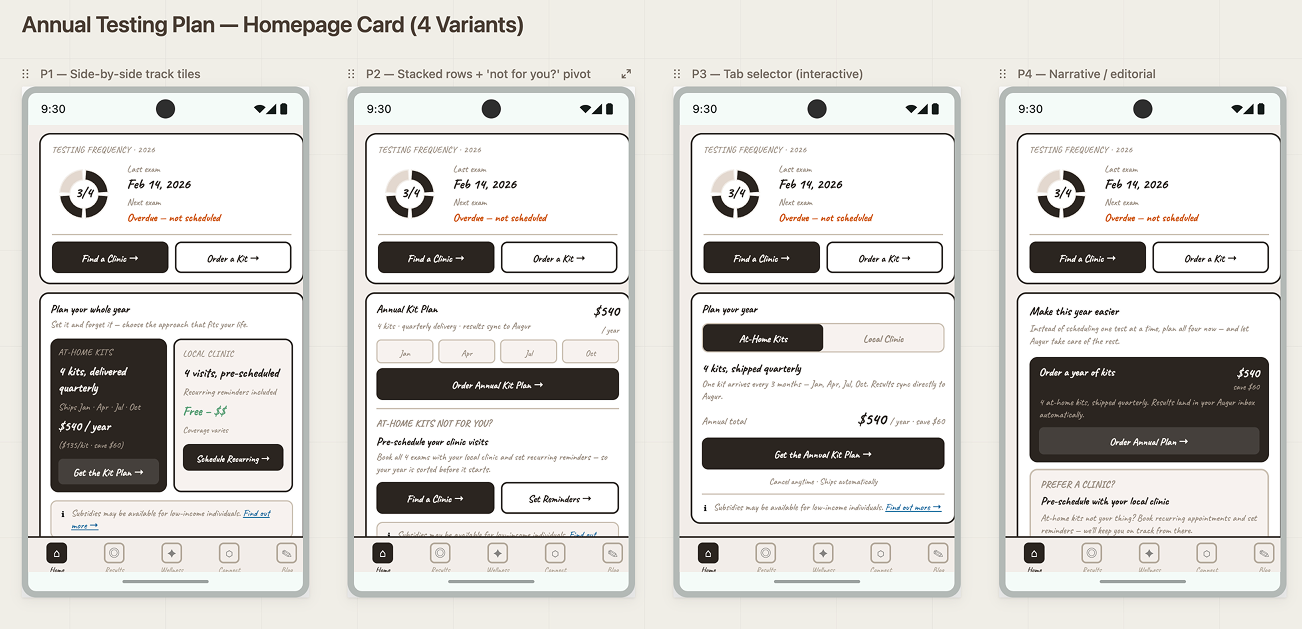
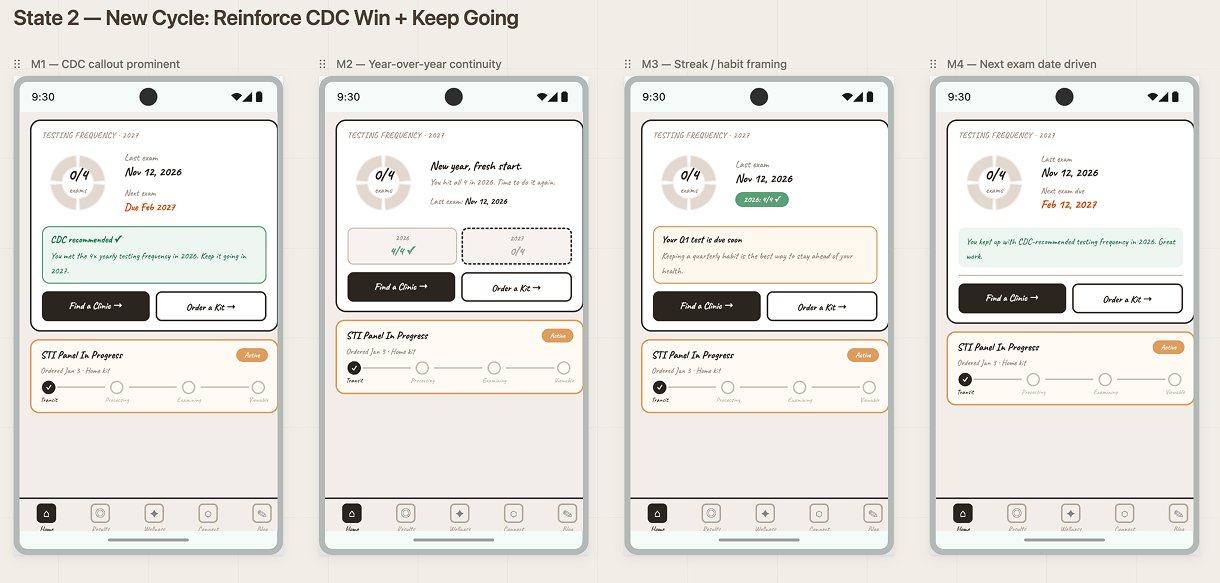
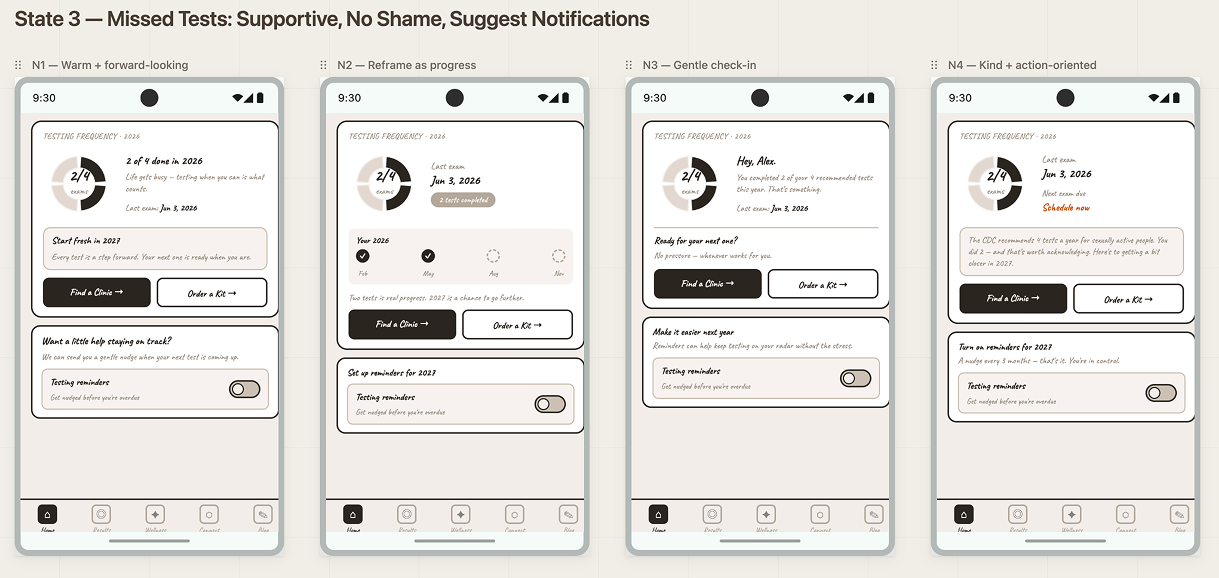
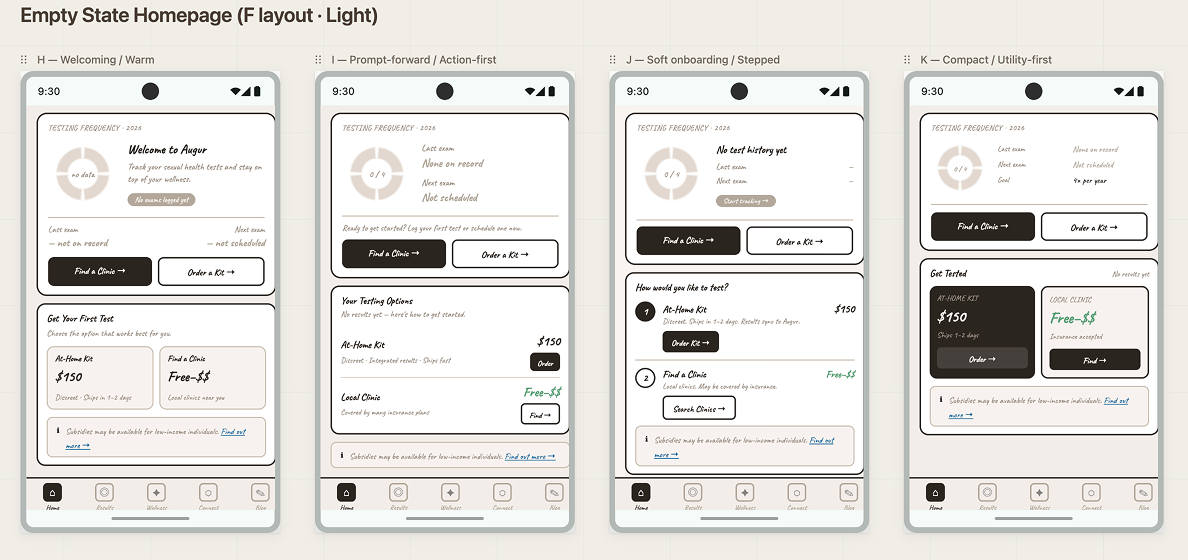
Prompting for the dashboard revolved around solutions for tracking testing progress over time, keeping track of testing sequences, timely notifications, and sales prompts for testing or clinical appointments. I really liked the radial progress element as I felt it was a sleek, compact approach to indicating progress and allowed for supplemental information such as last/next exam dates to be shown in tandem.
I made the ultimate decision to separate merchandising opportunities into a separate page/flow altogether to keep information overload low.
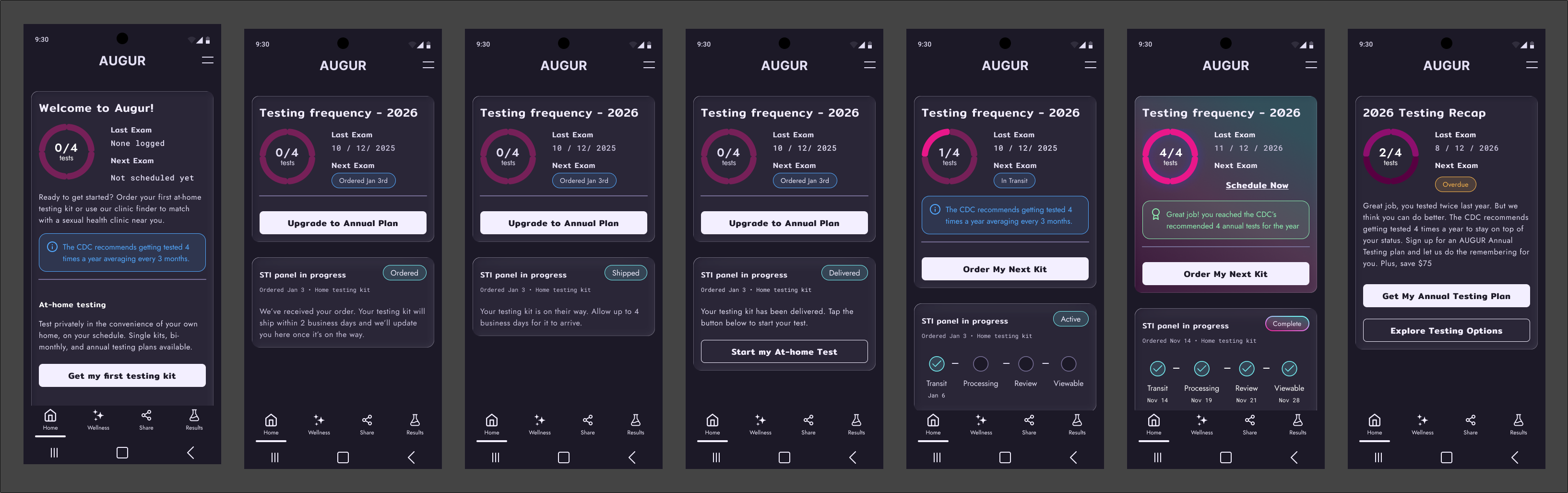
These dashboard examples utilize an early design system that I created with Claude Design. This system was modified heavily for the final design as it lacked unity and resulted in visual clutter.
The feature elements in these examples incorporate the radial design and the stepped "STI panel in progress" tracker. These designs were modified to accomodate clinical testing flows, relying on timely notifications and clear indicators for errors and edge cases.
While this project is complete, this case study is a work in progress.
Next steps include:
- outlining how ideation stages informed additional feature designs
- a total overview of the completed app design
- expected outcomes
- edge cases, business needs, and tradeoffs discussion.
I'd love to chat about how I can support your UX needs

